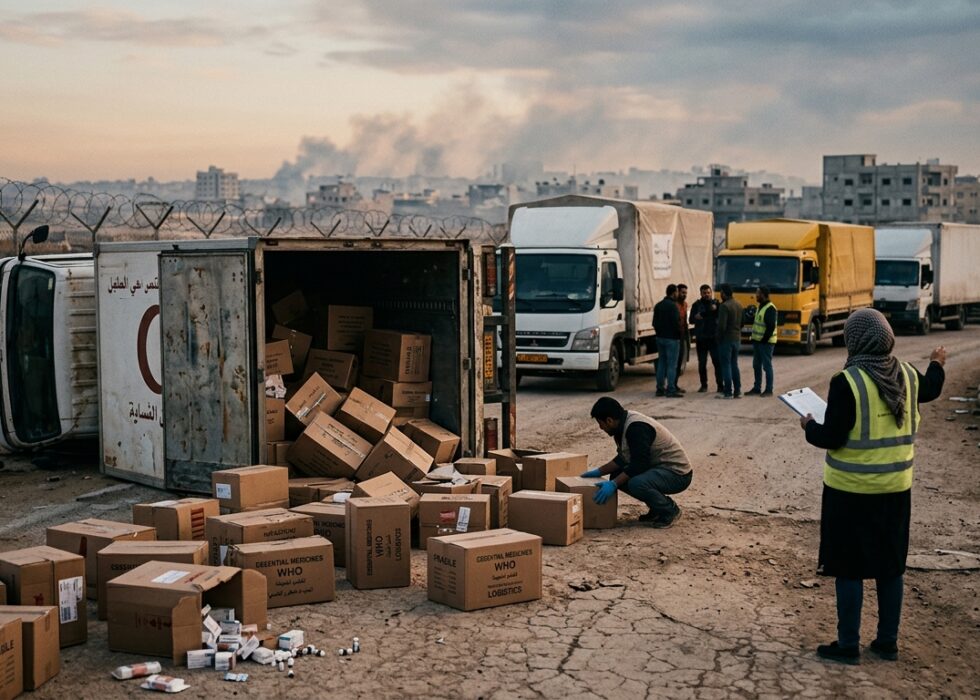
Why Medical Equipment Supply Chains Are Under Unique Strain
Due to the conflict between the United States and Iran, the escalating military, economic, and geopolitical confrontation involving Iran, Israel, the U.S., and Iran‑aligned proxy groups has become a defining force in global logistics. For supply chain professionals, this conflict functions less like a distant geopolitical issue and more like a persistent systems shock altering trade routes, raising costs, and complicating regulatory compliance.
For the United States, the consequences are unevenly distributed. Consumer goods feel price pressure and delays, energy markets experience volatility, and industrial supply chains absorb higher transportation costs. However, medical equipment and healthcare logistics have emerged as one of the most exposed sectors, where even minor disruptions can have outsized human and economic consequences.
Strategic Geography and Chokepoint Pressure
Iran’s geographic position places it at the center of several indispensable global trade corridors. Escalation in and around the region has destabilized traffic through key maritime and air routes, most notably those connecting Asia, Europe, and North America. As shipping companies divert vessels away from high-risk areas, voyages have become longer, schedules less predictable, and capacity scarcer.
For U.S. importers, even those sourcing goods far from the Middle East, this matters. Ocean shipping functions as a global pool; when vessels are tied up on longer routes, effective capacity tightens everywhere, driving up costs and lead times across the board.
Energy Prices and Cost Transmission
Conflict‑linked instability has also injected a sustained risk premium into energy markets. Transportation—whether by sea, air, or land—remains deeply sensitive to fuel prices. As a result, logistics providers have passed higher operating costs downstream in the form of fuel surcharges, rate increases, and tighter contract terms.
Healthcare logistics are particularly exposed. Temperature‑controlled freight, expedited air shipments, and specialized handling for high‑value medical devices all magnify the impact of rising energy costs. What might register as marginal inflation in retail supply chains becomes significant in clinical settings.
Regulatory Friction in a Sanctions‑Heavy Environment
Medical products are often exempt from sanctions in principle, but not from complexity in practice. As Iran‑related sanctions have expanded, compliance requirements have intensified—not only for companies dealing directly with Iran, but also for global manufacturers whose products travel through sanctioned jurisdictions or involve restricted technologies.
Medical equipment frequently incorporates electronics, imaging components, sensors, or software that fall into dual‑use or controlled categories. This has slowed licensing decisions, increased legal scrutiny, and introduced hesitation among suppliers—delays that can ultimately affect U.S. availability.
The United States relies heavily on overseas production for medical devices and components. Even equipment assembled domestically often depends on parts sourced internationally. When shipping lanes are disrupted or air cargo routes are constrained, these dependencies quickly become pressure points.
Unlike consumer goods, hospitals and clinics cannot easily substitute alternatives or delay demand. Shortages of imaging components, infusion equipment, diagnostic consumables, or protective supplies can directly affect care delivery. Global instability therefore translates into operational risk at the bedside.
Rising Healthcare Costs
As logistics expenses climb, healthcare providers face rising procurement costs. Over time, these costs filter into hospital budgets, insurance negotiations, and ultimately patient bills. Medical devices, already a capital‑intensive category, become more expensive as transportation, compliance, and inventory‑holding costs accumulate.
For patients, this can mean higher premiums, increased out‑of‑pocket expenses, or delayed access to new t
Increased Risk of Localized Shortages
While the U.S. has not experienced nationwide medical supply shortages tied directly to the Iran conflict, the risk profile has worsened. Providers report more frequent backorders, allocation constraints, and uneven regional distribution of certain supplies. These disruptions are often intermittent but disruptive—requiring constant operational workarounds.
Greater Government Involvement in Supply Chains
Recognizing these vulnerabilities, the federal government has expanded its use of industrial policy tools to reinforce domestic production of essential medical supplies. Measures aimed at reshoring manufacturing or prioritizing specific contracts underscore a broader reality: healthcare supply chains are now viewed as a matter of national resilience, not just economic efficiency.
A Logistics Challenge With Human Stakes
The Iran‑related conflict illustrates how modern warfare and geopolitics increasingly operate through supply chains. For U.S. healthcare logistics, the stakes are unusually high. Delays, cost increases, or regulatory bottlenecks do not simply affect margins, they affect patient care.
For American families, the connection may not always be visible, but it is real. Access to timely, affordable healthcare increasingly depends on the ability of global logistics networks to function under sustained geopolitical stress. In this environment, resilience is no longer optional, it is a prerequisite for care.
References
- Thomson Reuters Institute – Global Trade and Supply Chain Impacts of Iran‑Related Conflict
- Reuters Graphics – Strait of Hormuz and Energy Market Disruptions
- Congressional Research Service – Iran, Sanctions, and Global Shipping Risk
- Atlas Institute for International Affairs – Red Sea Shipping Crisis and Global Trade
- U.S. Office of Foreign Assets Control (OFAC) – Iran Sanctions and Humanitarian Trade Guidance
- U.S. Department of Health & Human Services – Defense Production Act and Medical Supply Chain Resilience
- American Association of Medical Colleges (AAMC) – Healthcare Supply Chain Vulnerability Reports
- UNCTAD – Freight Rate Volatility and Geopolitical Risk in Maritime Transport